Telehealth Therapy — All of Pennsylvania

Rediscover
your strength.

You've been carrying a lot — trauma, burnout, anxiety, the weight of caring for everyone else. Therapy can help you slow down, make sense of your experiences, and reconnect with who you are.

20+
Years Experience
Columbia
University Trained
ABCT
Award Recipient
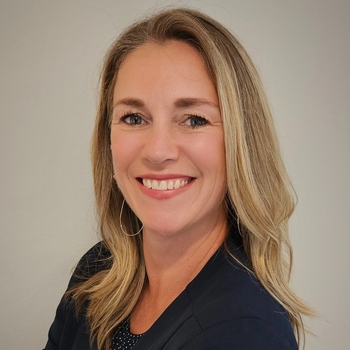
Carrie Comeau, LCSW — Restore Resilience Counseling
2024 Award
Champion of Evidence-
Based Interventions
ABCT
Credentials & Training
Licensed Clinical Social Worker (LCSW), Pennsylvania
20+ years in behavioral health
Master of Social Work, Columbia University
Trained in Prolonged Exposure Therapy with Dr. Edna Foa and team at the University of Pennsylvania (CTSA)
Cognitive Behavioral Therapy (CBT) for trauma, anxiety, and depression
Trauma-Informed Care
Recognition & Impact
Champion of Evidence-Based Interventions Award
Association for Behavioral and Cognitive Therapies (ABCT), 2024
University Lecturer
Graduate-level trauma treatment
Statewide Systems Leader
Directing initiatives across Pennsylvania to expand access to effective mental health care
Meet Carrie

You don't need to have the right words — just reaching out is enough.

Have you ever found yourself thinking, I'm exhausted. How did I get here? Where is my life going? You feel overwhelmed and stretched thin. Carrying trauma, depression, or anxiety alone is lonely and hard.

My work is to help you slow down, make sense of what you've been through, and figure out what you actually want — rather than living by reacting to everyone else's needs and expectations.

My career in behavioral health spans more than twenty years, across clinical work, research, training, and systems leadership. I started by working with survivors of sexual abuse and trauma, spending five years in intensive Prolonged Exposure training with Dr. Edna Foa and her team at the University of Pennsylvania. That work gave me deep, firsthand experience with trauma, PTSD, anxiety, depression, and the range of challenges that come alongside them.

Beyond the therapy room, I am deeply committed to expanding access to effective treatment. I spent a decade in Philadelphia's public behavioral health system building the infrastructure to bring evidence-based care to communities that needed it most, and for the past four years I've continued that work at the state level across Pennsylvania. All of that comes with me into every session. It's why I can be present with whatever you bring.

If any of this feels familiar, reach out. I offer a brief phone or video consultation — no pressure, no commitment — just a chance to talk and see if working together feels right.

How I Can Help

Areas of Specialty

Every person is different. I tailor my approach to your needs, drawing on two decades of experience, advanced training in evidence-based treatment, and a deep commitment to expanding access to care that actually works.

🌿

Trauma & PTSD

Work through what trauma has left behind — the memories, the avoidance, the numbness — at a pace that feels safe to you.

🔥

Burnout & Compassion Fatigue

Reclaim yourself from the cycle of over-giving. Build boundaries, restore energy, and reconnect with what matters to you.

💭

Anxiety & Depression

Understand the patterns that keep you stuck and develop practical strategies for moving through difficult emotions.

🏠

Domestic Violence & Emotional Abuse

A safe, non-judgmental space to process experiences of abuse and rebuild a sense of safety and self-worth.

🔄

Life Transitions

Navigate major changes — career shifts, relationship changes, parenthood, loss — with clarity and support.

👩‍👧

Women's Issues & Parenting

Explore the unique pressures women face balancing identity, relationships, career, and family responsibilities.

How It Works

01

Free Consultation

A brief 15-minute phone or video call to talk about what you're looking for and see if we're a good fit.

02

Start Therapy

Weekly 50-minute telehealth sessions from anywhere in Pennsylvania. We'll develop a plan tailored to your goals.

03

Build Resilience

With consistent support and evidence-based tools, you'll develop new skills and reconnect with your strength.

Schedule Your Free Consultation
Investment: Private pay only · Superbills provided for out-of-network reimbursement · No Surprises Act
Insights & Resources

From the Blog

Burnout & Self-Care
April 2026 · 5 min read

Caregiver Burnout Is Not Just Being Tired — It's Losing Yourself

You're the one everyone depends on. At work, at home, in your family. But somewhere along the way...

Read more →
Getting Started
April 2026 · 5 min read

Why Private Pay Therapy Might Be the Best Investment You Make This Year

Insurance covers a lot of things. But when it comes to therapy, what insurance dictates and what you actually need...

Read more →
Clinical Reflections
April 2026 · 6 min read

What Five Years of Prolonged Exposure Therapy Taught Me

For five years, I delivered Prolonged Exposure therapy on a clinical research study at UPenn. That work shaped how I think about trauma, evidence, and what it takes to help people heal...

Read more →
Get In Touch

Start with a free consultation.

Not sure if therapy is right for you? That's okay. I offer a brief 15-minute phone or video consultation — no pressure, no commitment. It's just a chance to talk about what's going on and see if this feels like a good fit.

📞
Phone
267.225.5933
🖥️
New Clients
Book Online
📍
Location
Telehealth — All of Pennsylvania
💳
Payment
Private pay · Superbills provided

Send a Message

I'll respond within 1 business day.

This form is for general inquiries. For emergencies, call 911.
Good Faith Estimate (No Surprises Act)
Burnout & Self-Care

Caregiver Burnout Is Not Just Being Tired — It's Losing Yourself

You wake up exhausted. Not the kind of tired that sleep fixes — the kind that sits in your bones. You go through the motions: care for the kids, check on your aging parent, show up for work, hold it together for everyone who needs you. And at the end of the day, there's nothing left.

This is caregiver burnout. And it's not a weakness — it's what happens when a deeply caring person gives more than they have, for longer than anyone should.

What caregiver burnout actually looks like

Burnout doesn't always look dramatic. Sometimes it shows up as irritability that surprises you — snapping at someone you love over something small. Sometimes it's a creeping numbness, a feeling of going through the motions without being present. Sometimes it's resentment toward the very people you're caring for, followed immediately by guilt for feeling that way.

Other signs include difficulty sleeping even when you're exhausted, withdrawing from friends and activities you used to enjoy, feeling like nothing you do is ever enough, and physical symptoms like headaches, muscle tension, or getting sick more often than usual.

Why caregivers resist getting help

If you're a caregiver, chances are you've internalized a belief that your needs come last. You might tell yourself that other people have it worse. That you should be able to handle this. That taking time for yourself is selfish.

These beliefs are understandable — they often come from a lifetime of being the responsible one, the strong one, the person others turn to. But they're also the beliefs that keep you stuck.

Here's the truth: you cannot pour from an empty cup, and that's not a motivational poster — it's a clinical reality. Chronic stress without recovery leads to emotional depletion, compassion fatigue, and eventually, a breakdown in your ability to care for anyone, including yourself.

What therapy for burnout looks like

Therapy for caregiver burnout isn't about adding one more thing to your list. It's about creating a space — maybe the only space in your life — where someone is focused entirely on you.

In therapy, we work on identifying the patterns that got you here. We challenge the beliefs that tell you your needs don't matter. We build practical strategies for setting boundaries, asking for help, and reconnecting with the parts of yourself that got lost in the caregiving.

Cognitive Behavioral Therapy can help you recognize and restructure the thought patterns that keep you trapped in the cycle of over-giving. A trauma-informed approach can address any underlying experiences that shaped your relationship with caregiving in the first place.

You don't need to earn the right to get help

If any of this resonates, I want you to know something: you don't need to be in crisis to deserve support. You don't need to justify it. You just need to reach out.

A brief consultation — 15 minutes, no pressure — is a good first step. It's a chance to talk about what's going on and see if therapy feels like the right next move.

Ready to take the first step?

I offer a free 15-minute consultation to help you decide if therapy is right for you.

Call 267.225.5933
Getting Started

Why Private Pay Therapy Might Be the Best Investment You Make This Year

When people first consider therapy, one of the first questions is usually: "Does my insurance cover this?" It's a reasonable question. Therapy is a financial commitment, and insurance exists to help with healthcare costs.

But there's something most people don't realize about how insurance works with mental health care — and understanding it can change how you think about the investment.

What insurance requires

To use insurance for therapy, your therapist has to give you a mental health diagnosis. That diagnosis goes on your permanent medical record. Insurance companies then dictate how many sessions you're approved for, what kind of treatment is covered, and when you need to stop.

Your therapist also has to submit notes and treatment plans to the insurance company, which means a third party has access to details about your care. For many people, that level of outside involvement doesn't feel compatible with the kind of open, private space therapy is supposed to be.

What private pay offers

Private pay — also called out-of-pocket or self-pay — means you pay your therapist directly. There's no diagnosis requirement, no session limits, and no insurance company reviewing your treatment.

This creates several meaningful advantages. Your therapist can tailor your treatment entirely to your needs, not to what an insurance company will approve. There are no arbitrary limits on how many sessions you can have. Your therapy stays completely private — no diagnosis on your record, no notes sent to a third party. And you have the freedom to choose the therapist who's the best fit for you, not just whoever is in your network.

The cost question

Private pay therapy in Pennsylvania typically ranges from $125 to $200+ per session for a licensed therapist. That's real money, and it's worth being honest about that. But consider what you're getting: an hour each week with a highly trained professional, focused entirely on helping you live a better life.

The superbill option

Even with private pay, you may be able to get partial reimbursement from your insurance company. Many therapists provide what's called a superbill — a detailed receipt you can submit to your insurer for out-of-network reimbursement. Depending on your plan, you may get back 40-80% of the session cost.

It's worth calling your insurance company and asking about your out-of-network mental health benefits before ruling out private pay. Under the No Surprises Act, you also have the right to receive a Good Faith Estimate of costs before starting treatment.

The bottom line

Private pay therapy is not accessible to everyone, and I want to be honest about that. It is a financial privilege. Insurance-based therapy provides critical access to care for millions of people, and there are many excellent therapists who work within insurance networks.

For those who are in a position to consider it, private pay offers meaningful advantages: full privacy, no session limits, no outside oversight of your treatment, and the freedom to choose the therapist who is the best fit for you.

The best way to figure out what's right for you is to talk to a therapist directly. A brief phone or video consultation can help you understand your options and decide what feels right.

Ready to take the first step?

I offer a free 15-minute consultation to help you decide if therapy is right for you.

Call 267.225.5933
Clinical Reflections

What Five Years of Prolonged Exposure Therapy Taught Me

Dr. Edna Foa, the developer of Prolonged Exposure (PE) therapy, died this spring at the age of 88. Her passing has prompted me to revisit the years I spent practicing the treatment she developed, and to reflect on what that work taught me about trauma, healing, and the kind of clinician I wanted to become.

What the work was

For five years early in my career, I delivered PE as a primary therapist on a research study at the University of Pennsylvania's Center for the Treatment and Study of Anxiety. The study compared PE to client-centered therapy in survivors of sexual violence. I sat with the same group of clients week after week, under two hours of weekly supervision from the Penn team. It was the most rigorous clinical training I have ever received.

PE itself is built on a counterintuitive idea: avoidance keeps trauma alive, and the path through is to approach what happened in a careful, systematic, supported way. Before this approach was widely accepted, much of the field believed direct engagement with traumatic memories would harm patients. PE challenged that. Study after study has shown it significantly reduces PTSD symptoms in the majority of patients who complete it. By 2007, the Department of Veterans Affairs adopted PE as a first-line treatment for PTSD, training over a thousand therapists nationwide.

In practice, PE has two core components. The first is imaginal exposure, where the patient recounts the traumatic memory aloud in session, repeatedly, until it loses its overwhelming emotional charge. The second is in vivo exposure, where the patient gradually re-engages with real-world situations they have been avoiding. It is not about reliving trauma for the sake of it. It is a structured, guided process, and the patient is always in control. PE typically involves 8 to 15 sessions, and the research consistently shows meaningful, lasting reduction in PTSD symptoms for people who complete it.

What the work taught me

Doing this work for five years taught me three things I carry into every session.

Trust the evidence. PE works because it has been tested. It is studied, measured, refined. The discipline of working inside that kind of rigor taught me to be skeptical of clinical intuition unmoored from data. The treatments we offer to people in pain should be backed by the strongest possible evidence, not just clinical comfort. That conviction has shaped my entire career.

People are more resilient than we think. PE asks patients to approach what they have spent years avoiding. Many clinicians resist this because they worry about causing harm. The work showed me, over and over, that people can face extraordinarily difficult material and come through it stronger. I carry that belief into every client relationship now: the person across from me has more capacity than they know.

Access matters. PE was developed in a research environment, but its purpose was always broader: to make effective treatment available where it is needed most. I spent a decade in Philadelphia's public behavioral health system, building initiatives to expand access to effective mental health treatment. For the past four years I've continued that work at the state level across Pennsylvania. This is what I do every day, alongside my clinical practice. The need for effective, accessible trauma treatment in under-resourced communities is enormous, and the gap between what works and what's available remains one of the central problems in the field.

How this shows up in my practice today

The lessons of those five years are the foundation of how I work with every person who comes to me. Trust the evidence. Believe in resilience. Prioritize access. Whether I'm doing trauma work, helping someone through burnout, or sitting with anxiety, those principles guide the way I show up.

Dr. Foa's contribution to the field was extraordinary. Her work made effective treatment for PTSD possible for millions of people. The clinicians who trained in the environment she built will carry that work forward for decades to come.

Resources

If you're interested in learning more about Prolonged Exposure Therapy:

Center for the Treatment and Study of Anxiety, University of Pennsylvania
APA Clinical Practice Guideline: Prolonged Exposure
National Center for PTSD: About Prolonged Exposure
NIMH: Post-Traumatic Stress Disorder

Ready to take the first step?

I offer a free 15-minute consultation to help you decide if therapy is right for you.

Call 267.225.5933